Thinking about selling your Evanston condo but not sure where to start? You are not alone. Between association rules, small‑space staging, and timing the market, there is a lot to juggle. This guide breaks the process into clear steps so you can prepare with confidence, attract stronger offers, and close without last‑minute drama. Let’s dive in.
Evanston condo market: what to know
Evanston’s condo market shifts by building, location, and amenities. Citywide sale prices have hovered in the mid‑$300Ks to low‑$400Ks recently, and building‑level data often matters more than city averages. Regional MLS summaries show different medians by segment and time frame, which is why pricing to your building and immediate area is key. You can review segment snapshots in the latest NSBAR/MRED market report.
Certain parts of Evanston see steady investor interest due to Northwestern’s presence and the area’s strong rental demand. University‑related demand can influence comps, especially near campus. For context, Northwestern maintains a large student body across undergraduate and graduate programs, as noted in the university’s published enrollment data.
If you can choose your timing, spring tends to be the strongest window across Midwest markets. Listing in April or May often leads to faster sales and a modest premium compared to winter months, according to national seasonality analyses like this study of 47 million home sales. Aim to finish prep work before that window.
Set your plan and timeline
A smart prep plan is the fastest way to boost appeal without over‑spending. Start by choosing your target list date, then work backward 4 to 8 weeks for light updates and staging. If you plan a minor kitchen or bath refresh, allow 8 to 12 weeks to source materials and complete work.
Your goal is to show a clean, bright, move‑in‑ready space at a competitive price for your micro‑market. Use building‑level comps when setting scope and budget. In many Evanston buildings, small, well‑targeted improvements outperform full gut renovations on ROI and time to market.
High‑ROI updates that matter
A few focused projects can transform buyer perception without a major remodel. National Cost vs. Value data highlights these midrange winners:
- Minor kitchen refresh. Refacing or painting cabinets, swapping hardware, updating counters, and adding modern LED lighting routinely ranks near the top for payback, with midrange minor kitchens recouping about 96% of cost in the 2024 report. See the latest Cost vs. Value analysis.
- Midrange bath refresh. New vanity top, refreshed grout and caulk, and updated fixtures deliver strong appeal with a national average recoup around 74% in 2024. Review details in the Cost vs. Value report.
- Paint and lighting. Fresh neutral paint, updated light fixtures, and coordinated switches/faceplates make a small space feel current and clean.
- First impressions. Refresh entry lighting, clean the corridor side of your front door where allowed, and power‑wash or sweep balconies. Small cues set the tone.
Condo‑specific fixes you should tackle before photos and showings:
- Repair leaks, recaulk showers and tubs, and clean or replace grout.
- Service HVAC, replace filters, and confirm smoke/CO detectors work.
- Tighten loose balcony railings and verify window and door operation.
- Confirm washer/dryer and key appliances function if included.
Staging small spaces to sell
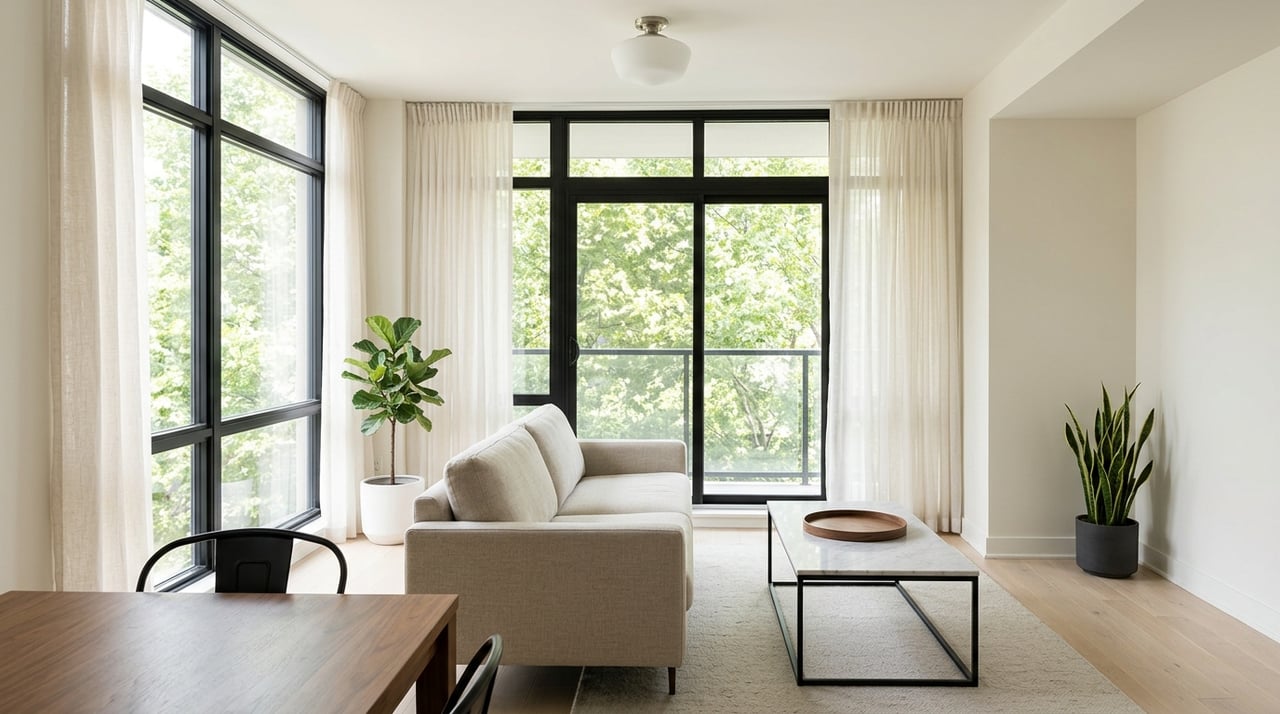
Staging helps buyers visualize scale and flow, which is crucial in condos. A large share of buyer agents report staging reduces time on market and can modestly increase offers, per the NAR Profile of Home Staging. Focus on light, layout, and livability.
Practical staging tips for Evanston condos:
- Declutter to show storage. Edit closets to 50–70% capacity and pack off‑season items.
- Neutralize colors and patterns. Keep a light, cohesive palette across rooms.
- Right‑size furniture. Choose pieces with visible legs to create air and sightlines.
- Define zones. Use rugs to mark living, dining, and workspace areas.
- Maximize light. Clean windows, open blinds, and add layered lighting.
- Use mirrors strategically. Place them opposite windows to add depth.
- Stage the balcony. A small bistro set and one plant can read like bonus square footage.
- Consider virtual staging for photos if the unit is vacant. Follow MLS and board rules for disclosures.
Photography and marketing essentials
Great presentation starts online. Schedule professional photos after cleaning, painting, and staging are complete. For most Evanston condos, a measured floor plan and a 3D tour can be the difference between a scroll‑by and a showing request.
- Shoot in late morning or early afternoon for natural light if possible.
- Keep sightlines clean and remove nonessential items before wide‑angle shots.
- Avoid heavy image processing that can misrepresent lighting or scale.
In listing remarks, highlight HOA inclusions like parking, storage, in‑unit laundry, and recent building updates. If your building has strong reserves, clear maintenance plans, or no recent special assessments, note those facts clearly once confirmed in the resale documents.
Association rules and Illinois law
Condo sales in Illinois have an extra layer: the statutory resale disclosure, commonly called the Section 22.1 resale packet. The Illinois Condominium Property Act requires that sellers obtain a defined set of documents and financial details from the association and make them available to buyers. You can review the law directly in the Illinois Condominium Property Act.
Here are the key points you should know:
- Order the packet promptly. Illinois law requires the association to provide the 22.1 information upon written request. Do this immediately after you accept an offer to avoid closing delays. Typical turnaround is roughly 7 to 21 days, depending on the building.
- Fees are capped. The law allows a reasonable fee, not to exceed 375 dollars for the resale package, plus an optional 100 dollar rush fee if completed within 72 hours. See details in the statutory language.
- Buyer rescission window. If any required item is missing at contract, buyers can cancel up to 5 days after the last required document is delivered, or until closing, whichever comes first. This is a common timeline risk, so plan ahead. You can verify this in the Section 22.1 provisions.
- Building approvals and logistics. Many associations require buyer applications or administrative approvals, elevator reservations, corridor protection, and certificates of insurance for movers or contractors. Confirm your building’s process early and share it with all parties.
22.1 resale packet at a glance
What buyers, lenders, and insurers expect to see in the packet typically includes:
- Governing documents and rules/regulations
- Unpaid assessment statement for the unit
- Anticipated capital expenditures and reserve fund status
- Last fiscal‑year financials and current budget
- Pending litigation and insurance coverage summary
- Any known building projects or special assessments
Order the packet right after contract acceptance, confirm the building’s turnaround time, and ask about rush options. If your association uses a third‑party service, find out how payment and delivery work so you do not lose days to administrative hiccups.
Lender and project reviews
Beyond your unit’s condition, buyers and lenders look at building health. Reserve levels, recent or pending special assessments, litigation, and owner‑occupancy ratios can affect financing options. Be transparent about upcoming capital projects if they appear in board minutes or the 22.1 packet. Early disclosure reduces renegotiations and rescission risk later.
If your building has rental caps or specific leasing rules, clarify them in your disclosures and marketing. Investor‑friendly policies expand the buyer pool in some parts of Evanston, while strict caps can tilt demand toward owner‑occupants. Both can be positives when communicated accurately.
Pre‑listing checklist
Use this time‑phased list to stay on track. Adjust if you plan a quick or as‑is sale.
4–12+ weeks before list date
- Review building‑level comps and set your target list window (spring is often best).
- Decide scope: light paint/repairs vs. minor kitchen/bath refresh.
- Outline budget and expected ROI by project.
4–8 weeks
- Book contractors and, if using, a stager; confirm association approvals for vendor access and any elevator reservations.
- Get estimates, order materials, and check permit needs for any in‑unit work.
2–4 weeks
- Declutter, donate, and store excess items to showcase space and storage.
- Complete repairs and paint; deep clean kitchens and baths.
- Stage key rooms: living, kitchen, and the primary bedroom.
1–2 weeks
- Schedule professional photography, a measured floor plan, and a 3D tour.
- Finalize listing remarks; highlight HOA inclusions like parking, storage, and in‑unit laundry.
- Confirm showing instructions and any building rules for access.
After contract acceptance
- Order the Section 22.1 resale packet and estoppel immediately; verify turnaround and any rush option.
- Share move‑out/move‑in procedures with all parties, including elevator reservations, corridor protection, and vendor insurance requirements.
When to list in Evanston
If you can be flexible, target April or May for the best odds of strong traffic and pricing. National analyses show spring listings often sell faster and for slightly more than winter listings. Plan your updates and staging so you are photo‑ready just before that window, and coordinate with your association to avoid delays on required documents.
The bottom line
Selling an Evanston condo starts with a right‑sized plan: prep for how buyers live today, price to your building and block, and stay ahead of association paperwork. With a 4–8 week runway, a few high‑ROI updates, and thoughtful staging, you can present a bright, move‑in‑ready home that stands out online and in person. If you would like a tailored pricing and prep plan for your building, reach out. Megan Livatino Real Estate Inc is here to guide you from first walkthrough to a smooth closing.
FAQs
What is the best month to sell a condo in Evanston?
- Late spring, especially April and May, often brings faster sales and a modest premium over winter months, based on national seasonality studies. Time your prep to be photo‑ready just before spring.
What is the Illinois Section 22.1 resale packet for condo sellers?
- It is a set of association disclosures required by law that covers governing documents, unpaid assessments, reserves, financials, litigation, insurance, and anticipated capital projects; order it right after contract acceptance to avoid delays.
How much does the 22.1 resale packet cost in Illinois?
- Associations can charge a reasonable fee capped at 375 dollars, plus an optional 100 dollar rush fee if completed within 72 hours, per the Illinois Condominium Property Act.
Should I remodel my kitchen before selling my Evanston condo?
- Full gut renovations rarely pay back immediately; a minor refresh with paint, hardware, lighting, and counters often delivers stronger ROI and faster market readiness.
Do I need to stage a smaller condo?
- Yes, even light staging helps buyers understand scale and flow; focus on decluttering, neutral paint, right‑sized furniture, and bright, consistent lighting to make the unit feel larger.
How do building rules affect my closing timeline?
- Association approvals, elevator reservations, corridor protection, and vendor insurance certificates can add time; confirm procedures early and share them with your agent, buyer, and movers.